
Search Missouri Traffic Court Records
Missouri traffic court records are public documents that cover traffic citations, moving violations, fines, and case outcomes filed in courts across all 114 counties and the City of St. Louis. The state's free online portal, CaseNet, gives you access to more than 45 million records from Missouri circuit courts, and you can search by name, case number, or filing date without creating an account.
Missouri Traffic Court Records Quick Facts
How to Search Missouri Traffic Court Records
CaseNet is Missouri's statewide court records system. It is free. No registration is needed for basic searches. The portal covers all 46 judicial circuits and contains traffic cases, municipal court filings, and other court records from across the state. You can access it any day of the week, Monday through Friday from 6 a.m. to 1 a.m. Central time. To start, visit courts.mo.gov/casenet.
When you search by name, enter the last name first in all caps, then a comma, then the first name -- for example, SMITH, JOHN A. This format helps the system return the most accurate results. You can also search by case number if you already have it, or narrow results by filing date and county. CaseNet shows docket entries, hearing dates, charges, and case dispositions. The system does not charge a fee to view basic case information.
CaseNet also has a Track This Case feature. Once you find a traffic case you want to watch, you can sign up for email or SMS alerts any time a new entry is added to that case. This is useful if you filed a case yourself, are waiting on a fine payment to post, or need to stay current on a pending court date. The help desk is available at (888) 541-4894 or osca.help.desk@courts.mo.gov if you run into trouble with the portal.
The screenshot below shows the CaseNet portal homepage, where you begin any search for Missouri traffic cases.
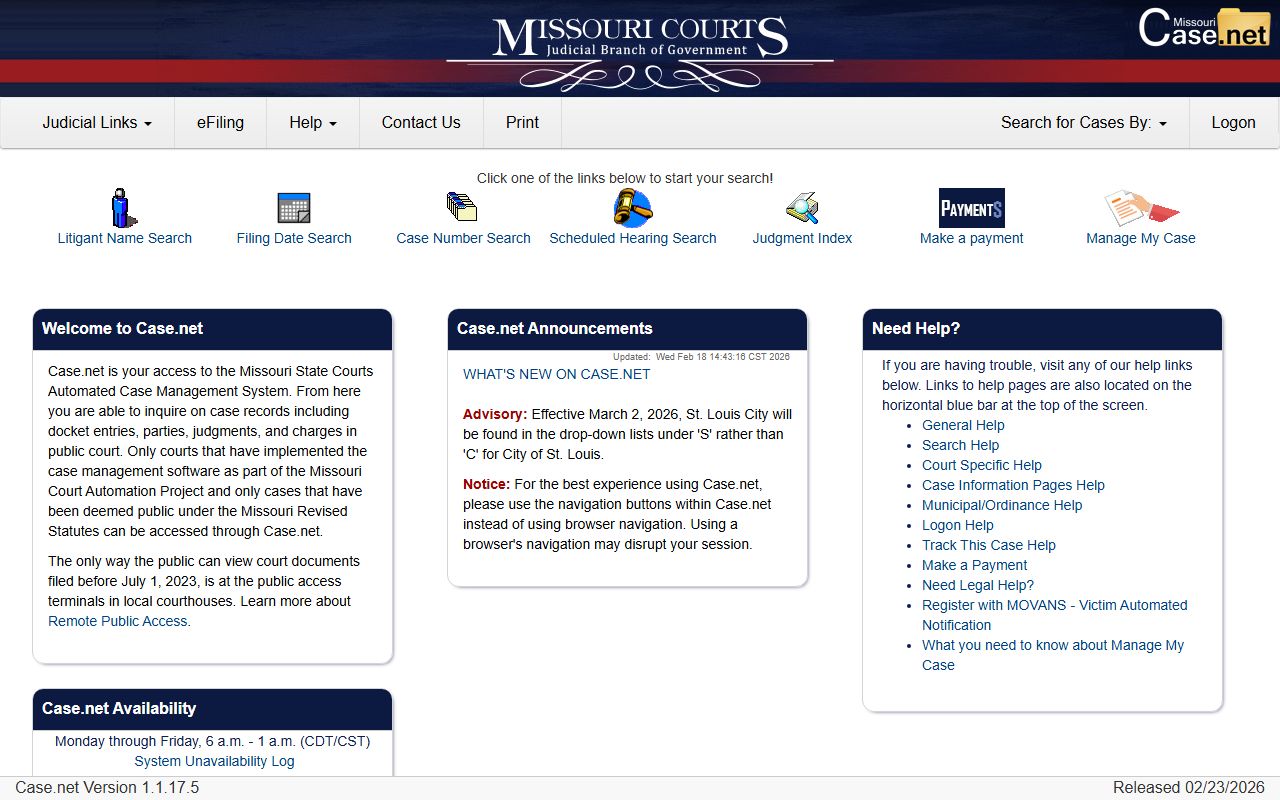
CaseNet pulls records from all Missouri circuit courts that participate in the Missouri Court Automation Program (MCAP), which includes the vast majority of courts statewide.
Missouri Driver Records and the Points System
The Missouri Department of Revenue maintains a separate set of records called driver records. These are distinct from court records. A driver record shows your license status, any points assessed against your license, prior violations, and suspensions or revocations. You can order your own driver record from the Department of Revenue's Driver License Record Center in Jefferson City for $2.82 per record. The mailing address is 301 West High Street, Room 470, PO Box 2167, Jefferson City, MO 65101. You can also call (573) 526-2407 or email dlrecords@dor.mo.gov. More information is at dor.mo.gov/driver-license/resources/records.html.
Missouri uses a points system to track traffic violations on your license. When you are convicted of a moving violation, the court reports it to the Department of Revenue, which then adds the appropriate number of points. If you accumulate 4 points in a 12-month period, the Department sends an advisory letter. Reach 8 or more points in an 18-month period and your license gets suspended -- 30, 60, or 90 days depending on your history. Hit 12 or more points in a 12-month period and the Department revokes your license for a full year. After reinstatement, your point total resets to 4.
Points do not stay on your record forever. Missouri law allows point reductions over time. After one year with no new violations, one-third of your points are removed. After two clean years, half your points come off. After three years without a new violation, your points drop to zero. The Department of Revenue's points FAQ at dor.mo.gov/faq/driver-license/tickets-points.html explains the full schedule.
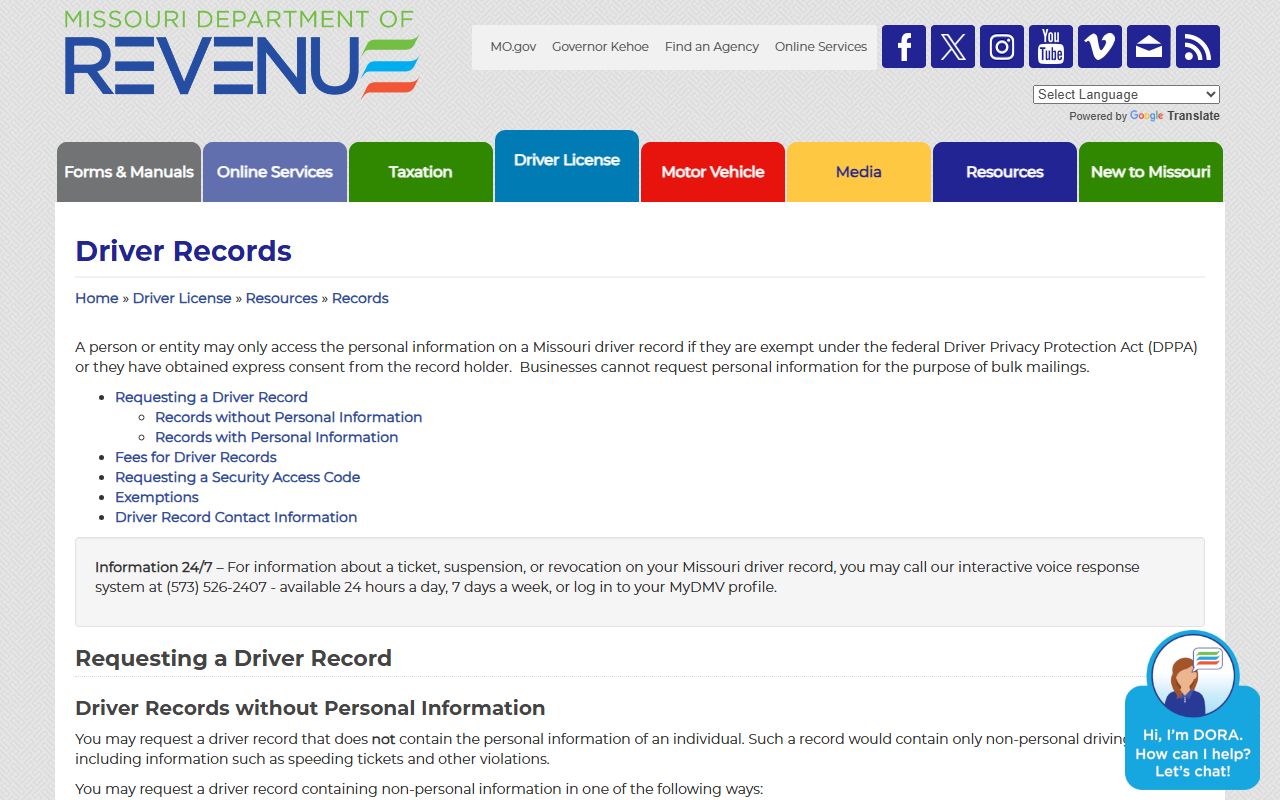
Driver records and court records serve different purposes. Court records show what happened in a specific case. Driver records show how violations have affected your license over time.
Failure to Appear and License Suspensions
If you receive a traffic citation in Missouri and do not respond by the deadline, the court can report your failure to the Department of Revenue. This triggers what is called a FACT suspension -- Failure to Appear, Comply, or Take action. A FACT suspension puts your driving privileges on hold until you resolve the underlying ticket and pay a $20 reinstatement fee. You can pay the reinstatement fee at mydmv.mo.gov. Once you have dealt with the original citation and paid the fee, you can fax compliance documentation to (573) 526-2511.
Dealing with a FACT suspension quickly matters. Driving on a suspended license in Missouri is a misdemeanor criminal offense under Chapter 302. That adds a new court case to your record on top of the original traffic violation. The Department of Revenue has a FAQ specifically about FACT suspensions and the steps to clear them at dor.mo.gov/faq/driver-license/fact-nrvc.html. If your license was suspended after a conviction rather than a failure to appear, different reinstatement rules apply and you may need to file proof of insurance in the form of an SR-22 certificate. Missouri requires SR-22 coverage for two years following a suspension or revocation.
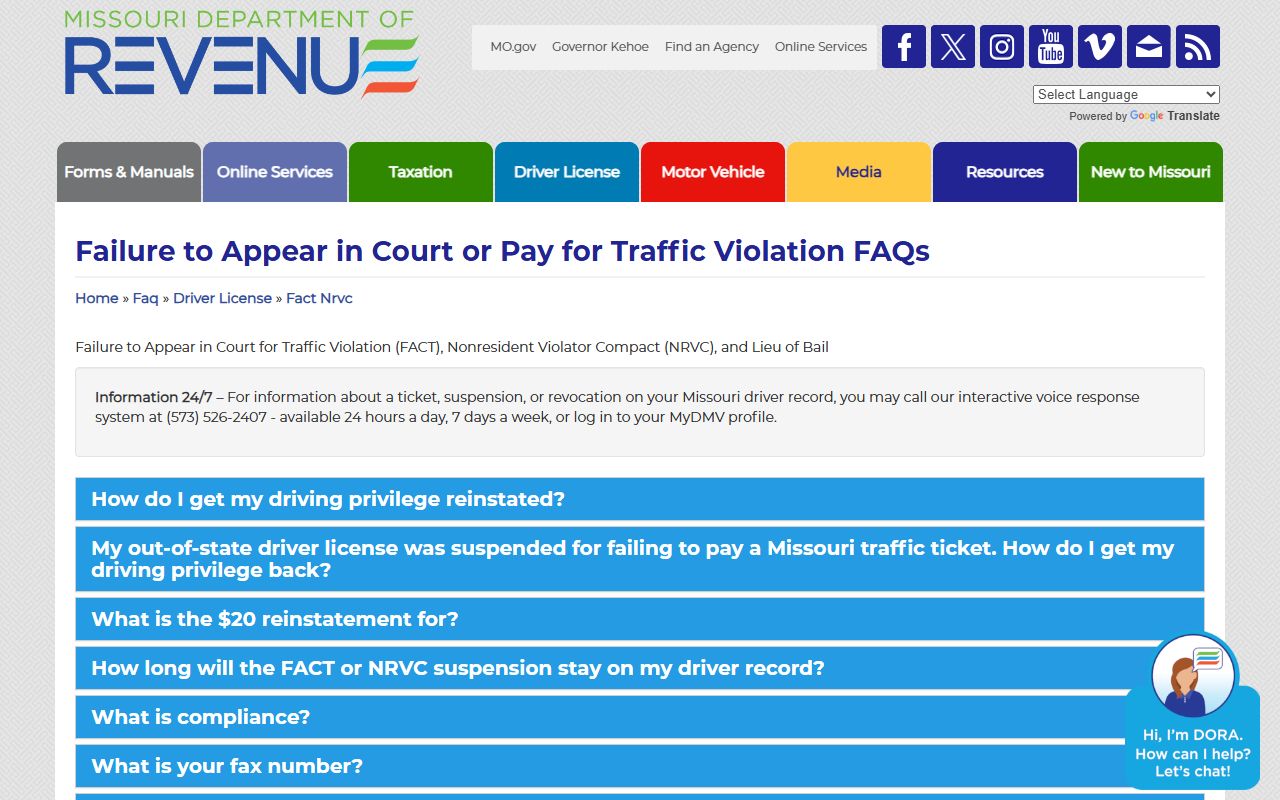
Resolving a failure to appear promptly is almost always cheaper than letting it sit. Courts may add fees, and the longer a FACT suspension stays active, the more it complicates your driving record.
Types of Traffic Records in Missouri
Missouri traffic records come in several forms depending on what the original incident was and which court handled it. Circuit courts handle most moving violation cases, including speeding, reckless driving, driving while intoxicated, and other offenses under Chapter 304 of the Missouri Revised Statutes. Municipal courts handle traffic violations that occur within city limits when the city has established its own municipal court under Chapter 479. Both types of courts report convictions to the Department of Revenue for point assessment purposes.
A traffic case file at the circuit or municipal court typically includes the original citation, any motions or continuances, records of court appearances, and the final disposition -- whether the charge was dismissed, reduced, or resulted in a guilty plea or finding. Fines assessed and proof of payment may also appear in the file. These are the records you find on CaseNet. The full case file with physical documents is kept at the courthouse clerk's office in the county where the case was filed.
Traffic filings differ from criminal records even when the underlying offense is a misdemeanor. Many traffic violations in Missouri are classified as infractions or petty misdemeanors. For these, no jail time is involved, but the case still appears in court records. More serious traffic offenses -- DWI, leaving the scene of an accident, or repeat violations -- are handled as Class A or B misdemeanors and generate both court records and criminal case filings. You can find both types of traffic cases through CaseNet by searching the defendant's name or case number.
Traffic Fines and Payment Options in Missouri
Missouri established the Fine Collection Center in 1996 under RSMo 476.385 to handle fine payments for non-contested traffic offenses. Many courts across the state refer standard traffic tickets to this central office rather than requiring you to appear in person. The Fine Collection Center is reachable by phone at (573) 522-8504. Mailing address is PO Box 236, Jefferson City, MO 65102.
You can pay traffic fines online through CaseNet's Pay By Web feature using Visa, Mastercard, Discover, American Express, or e-check. Credit card convenience fees apply on a sliding scale: $1.25 for fines up to $50, $1.75 for fines between $50.01 and $75, $2.15 for fines between $75.01 and $100, and 2.35% of the fine amount for anything over $100. E-check payments carry a lower flat fee. If you want to look up what a specific case owes, search for it on CaseNet first, then use the payment link within the case record.
Some courts use the Manage My Case system, which allows online ticket resolution without a court appearance. This pilot program started in Lee's Summit and has expanded to additional courts. Visit courts.mo.gov to see if your court participates. Courts not in the system still accept mail payments and in-person payments at the clerk's window.
Missouri Traffic Laws and Statutes
Missouri traffic law is organized under several chapters of the Missouri Revised Statutes, all available through the state's online statute database at revisor.mo.gov. The main chapters that govern traffic violations and the records they generate are Chapter 302, Chapter 304, and Chapter 479. Understanding which chapter applies to your situation can help you figure out where to look for records and what to expect from the process.
Chapter 302 covers driver's licenses -- requirements, suspensions, revocations, and the rules for reinstatement. If your traffic case affected your license status, Chapter 302 is where the relevant law sits. Chapter 304 covers traffic regulations: speed limits, right-of-way rules, equipment requirements, and specific moving violation definitions. Most of the traffic offenses you see on CaseNet trace back to a Chapter 304 charge. Chapter 479 governs municipal courts and sets out how cities can establish their own courts to handle local traffic cases.
Public access to court records is protected under Chapter 610, Missouri's Sunshine Law. This chapter establishes the right of any person to inspect and copy government records, including court filings. You do not need to be a party to a case to view it. You do not need to state a reason. Traffic court records are presumed open, though certain personal identifiers like Social Security numbers may be redacted from copies provided to the public.
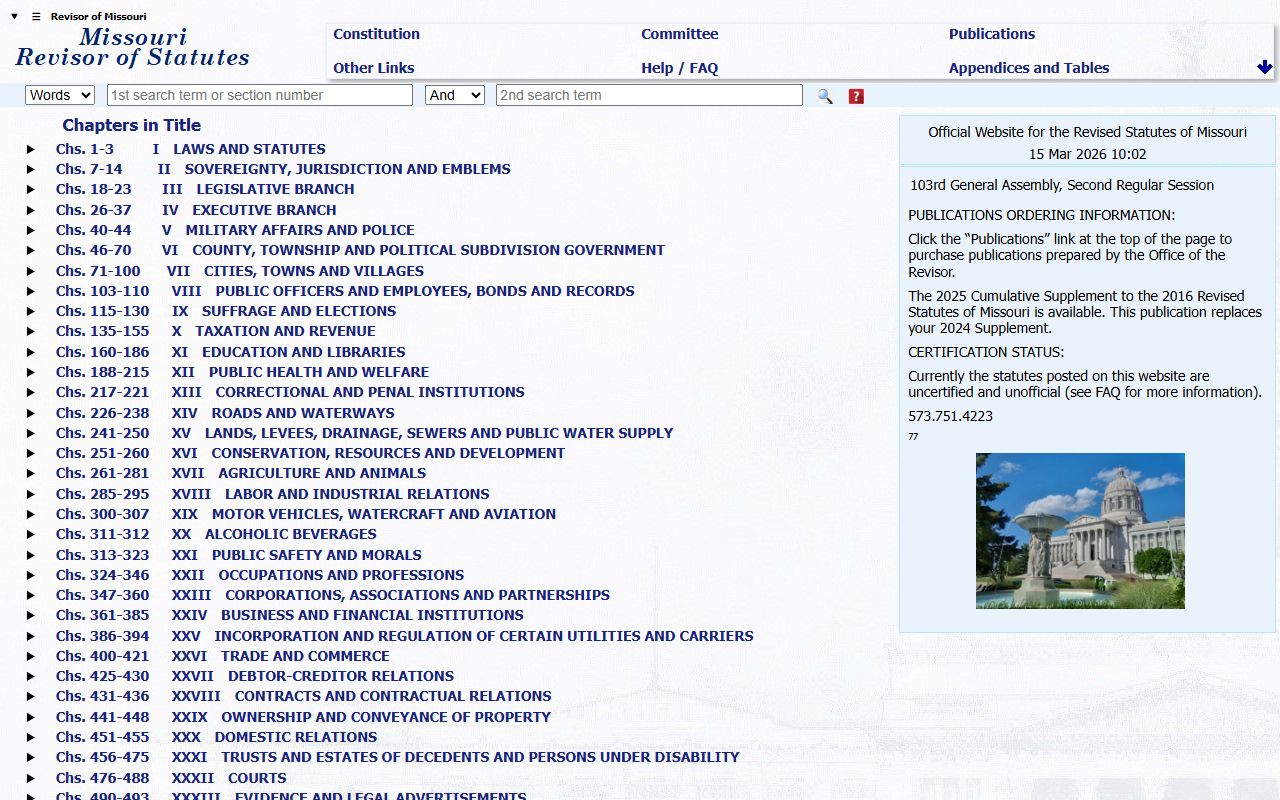
The revisor's website lets you search by chapter, section number, or keyword, making it straightforward to find the exact statute that applies to a specific violation type or fee amount.
Missouri Court Technology and Record Infrastructure
The Missouri Office of Administration manages the technology that keeps court records accessible across the state. The agency maintains 341 servers, 536 routers, and equipment spread across 224 locations to support court operations statewide. This infrastructure is what makes CaseNet possible -- a single search interface that connects to records from all participating Missouri courts. You can learn more about the state's court technology programs at oa.mo.gov.
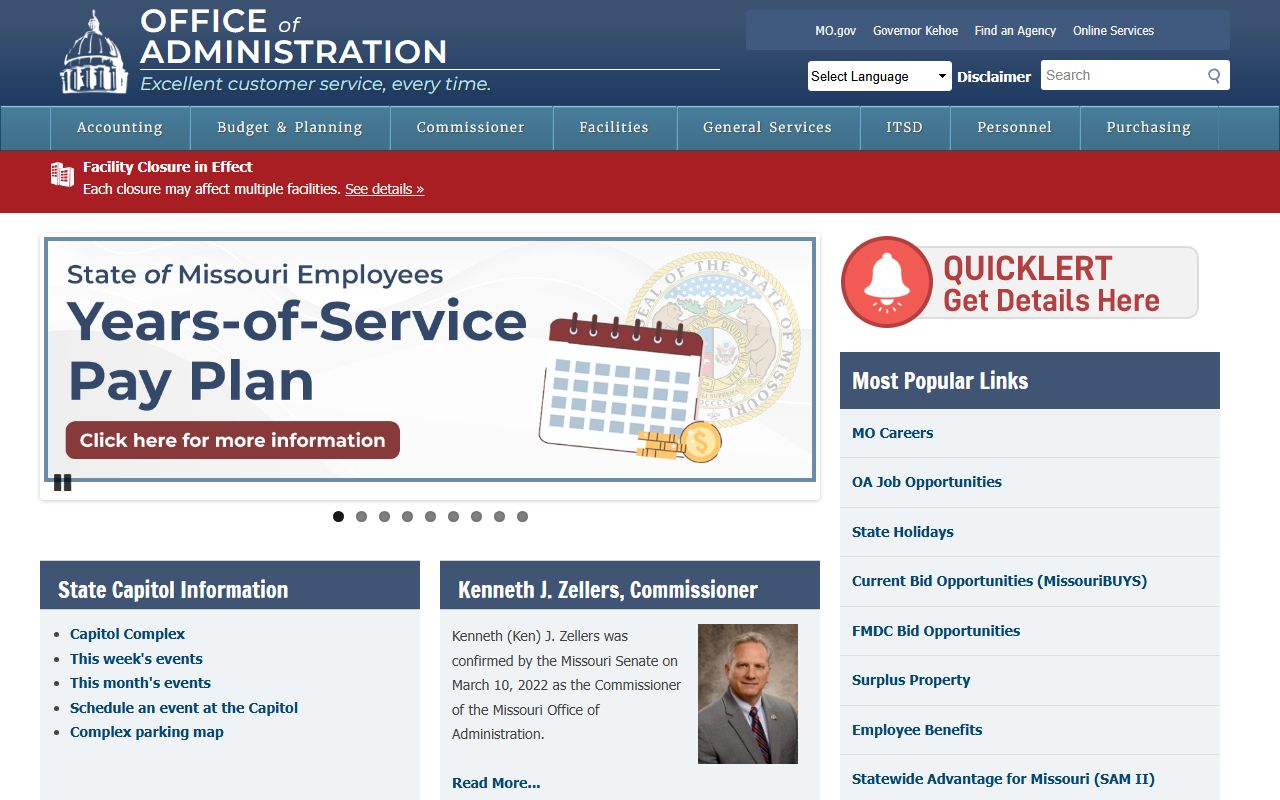
The Missouri Court Automation Program (MCAP) is the specific initiative that brought all 114 county courts and the City of St. Louis onto a shared records platform. Before MCAP, finding traffic records meant contacting each individual courthouse. Now, one search on CaseNet covers the whole state.
Legal Help for Traffic Cases in Missouri
If you are dealing with a complex traffic case -- a DWI charge, a license revocation, or a situation where points may affect your insurance -- getting legal advice is worth considering. The Missouri Bar operates a Lawyer Referral Service at mobar.org where you can find attorneys who handle traffic law, DWI defense, and license reinstatement matters. The referral service can connect you with a lawyer in your area who handles the type of case you have.
For people who want to handle their own case, the Missouri courts system has a self-represented litigant resource at selfrepresent.mo.gov. This site has plain-language guides on how to respond to a citation, what to expect at a traffic court hearing, and how to request a continuance or reduction. You can also find the court directory listing contact information for every circuit court in the state at courts.mo.gov.
Browse Missouri Traffic Court Records by County
Missouri has 114 counties, each with its own Circuit Court Clerk who handles local traffic cases and record requests. Select a county below to find courthouse contact information, local filing details, and access options for traffic records in that area.
View All 114 Missouri Counties
Traffic Court Records in Major Missouri Cities
Residents of Missouri's larger cities file traffic cases at their county circuit court or local municipal court. Select a city below to find resources and court information for traffic records in that area.